


S&P 500: -0.54% DOW: 1.12% NASDAQ: -1.62% 10-YR Yield: 4.19%
What Happened?
Markets absorbed a broad pullback this week as two of the three major U.S. equity benchmarks slipped from fresh record highs, while the Dow and small caps found support from the Fed’s third rate cut of the year. The S&P 500 and Nasdaq both retreated as investors rotated out of crowded AI and megacap tech trades, even as the Russell 2000 and Dow Jones Industrial Average managed gains on the back of a steeper pro‑cyclical tilt and renewed optimism around cheaper, domestically focused names. In effect, the market reaction framed the Fed move less as a “risk‑on” green light for long‑duration growth and more as a marginal tailwind for value, financials, industrials, and smaller companies that benefit most directly from lower policy rates.
Even with the Fed cutting again, the U.S. 10‑year Treasury yield pushed higher, underscoring lingering concerns that inflation will remain sticky and that term premiums need to reset above policy rates. That backup in long yields blunted some of the usual easing impulse for rate‑sensitive sectors like housing and utilities and helped cap gains for richly valued growth stocks despite the friendlier Fed stance. The net result was a week that looked less like a clean “relief rally” and more like a factor and style reshuffle: duration and AI‑beta sold, domestic cyclicals and small caps bought, all against the backdrop of a central bank that is easing at the front end while the long end quietly tightens financial conditions again.
Broadcom sees dip in quarterly margins due to AI, shares fall
- Broadcom reported Q3 revenue of $13.7B, up 28% year‑over‑year, with AI chip sales surpassing $3.8B.
- Oracle posted cloud infrastructure revenue growth of 49%, but overall sales rose only 5%, missing consensus estimates slightly.
- Both companies noted capital intensity spikes, with AI‑related capex now comprising over 60% of incremental spending for hyperscalers.
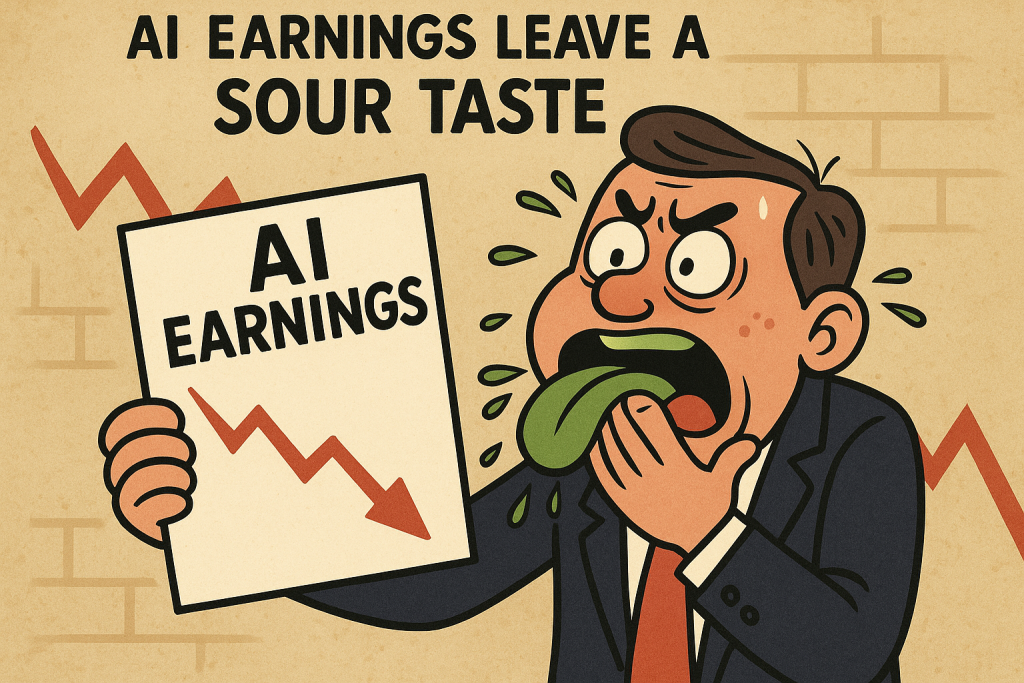
The key takeaway – This week a few of the tech industry’s top names reported Q3 earnings, and overall, left a sour taste in investors mouth’s. To start the week, Oracle posted results adding the first wrinkle: AI projects are piling up, but turning them into clean, near‑term profit is proving tougher than the hype promised. The company pointed to strong demand for AI‑related cloud infrastructure and big marquee partnerships, yet investors fixated on softer‑than‑hoped growth and the reality that building out data centers and GPU clusters is brutally capital‑intensive. Across both reports, the signal for tech is clear: the bottleneck is shifting from “is there AI demand?” to “does this spending actually earn its keep?” After a year in which AI‑linked names rerated on every mention of “accelerators” and “training clusters,” markets are now punishing even solid beats if they come with signs of margin strain, customer concentration, or hedged commentary about visibility. That is how bubbles start to deflate, not with revenue collapsing overnight, but with a slow realization that the payoff on massive AI capex is further out and messier than the slide decks implied.
Broadcom is a prime example of that message. One of the World’s top AI chip producers reported their latest earnings, reminding us that even the darlings of the AI boom are still bound by old‑fashioned math: revenue can soar while margins quietly erode. Despite smashing expectations with roughly 28% year‑over‑year revenue growth and a 70%‑plus surge in AI chip sales, management warned that gross margins will compress as a “higher mix of AI revenue” flows through, specifically lower‑margin AI systems and racks rather than ultra‑rich software and legacy infrastructure. That guidance, paired with talk of a 100‑basis‑point margin step‑down next quarter, was enough to send the stock sharply lower and splash red across the broader chip complex. Underneath the headline growth sits a concentration risk too: Broadcom’s huge AI backlog is anchored in just a handful of hyperscale customers, leaving the story heavily exposed to the capex cycles and whims of a very small club.
Fed Officials Spar Over Whether Rate Cuts Risk Credibility on Inflation
- The Fed’s December 2025 SEP shows core PCE inflation at 3.0% for 2025 and 2.5% for 2026 (median).
- The Fed’s longer-run inflation objective remains 2% (PCE inflation, over the longer run) per its Longer-Run Goals framework.
- The Supreme Court has allowed Fed Governor Lisa Cook to remain in office for now, with oral arguments scheduled for January 2026 in the removal dispute.
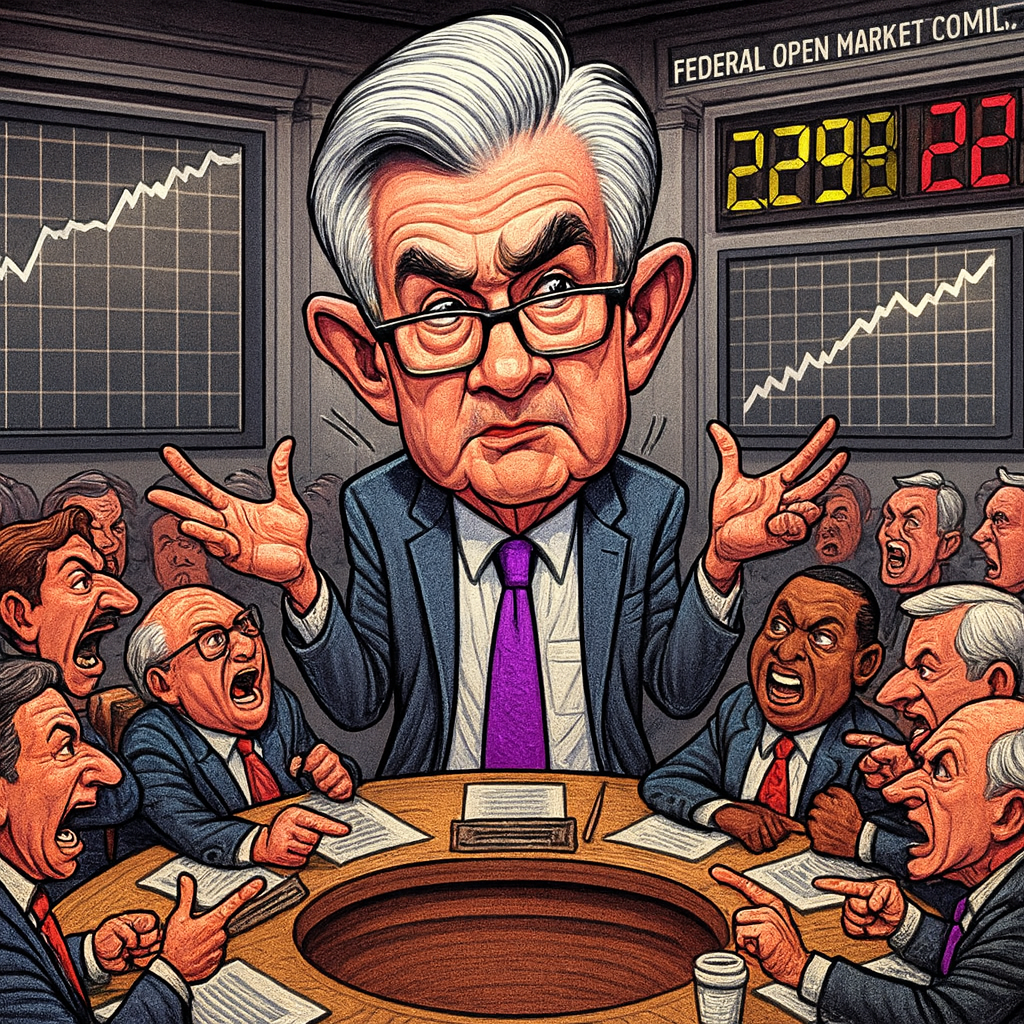
The key takeaway – The latest Fed meeting ended with a third straight 25 bp rate cut, but also with the clearest sign yet that the easing cycle is nearing a pause rather than accelerating. The new 3.50–3.75% target range effectively “undoes” most of the late‑cycle overtightening and, in the Fed’s own language, brings policy into a zone of plausible neutrality where future moves will be data‑dependent rather than pre‑programmed. That shift raises an awkward question for Jerome Powell: has he now overseen his last cut as chair, with the committee increasingly reluctant to ease further while core inflation is still running near 3% and only drifting down slowly toward target. Officials are also more openly wrestling with the credibility risk of cutting into still‑elevated inflation, with several warning that the Fed cannot simply declare a new de facto 3% target without saying so explicitly. The result is a kind of uneasy truce: policy is no longer restrictive enough to bite hard, but not yet easy enough to be called stimulative.
Beneath the headline decision, the debate has shifted squarely to risk management: is the bigger danger a softening labor market or an inflation rate that refuses to die. Hawks point to sticky services and housing inflation that should, in theory, cool as shelter data catch up and hiring slows; doves counter that signs of labor‑market weakening and rising delinquencies argue against further cuts unless the data clearly crack. The committee’s “higher bar” for additional easing means a true wait‑and‑see posture would be logical, but politics and internal divisions make a clean pause difficult, especially for a relatively new chair trying to preserve consensus and independence. For markets, the message is that the easy part of the easing cycle is over: without a sharper downturn or a clean break lower in inflation, the Fed looks content to sit near neutral and let real‑economy weakness, particularly in housing and rate‑sensitive sectors, do the remaining disinflation work.
From Around the Watercooler

Tokenization is finance’s next ETF moment
Lululemon Chief Executive Calvin McDonald to Depart Next Month
Behind the Deal That Took Disney From AI Skeptic to OpenAI Investor
Rivian’s AI, autonomy impress Wall Street, but EV and capital concerns remain
Coinbase to soon unveil prediction markets powered by Kalshi