


S&P 500: 0.10% DOW: -0.67% NASDAQ: 0.48% 10-YR Yield: 4.15%
What Happened?
Markets didn’t seem to grasp the holiday cheer this week, shuffling more than surging and failing to deliver any meaningful move in either direction. Stocks finished mixed, with the S&P 500 and Nasdaq easing as investors took profits in crowded megacap tech and AI names, while the Dow and more cyclical, value‑tilted areas found modest support. Under the surface, it looked less like a broad risk‑on rally and more like a late‑cycle rotation, as money drifted from high‑multiple growth into industrials, financials, and small caps that tend to benefit more directly from lower policy rates and a still‑intact growth backdrop.
The macro story was more interesting than the index moves. A divided Federal Reserve pushed through its third rate cut of the year, arguing that policy is now closer to “neutral” and that future moves will hinge tightly on incoming inflation and labor data, rather than any pre‑set easing path. Short‑term rates followed the Fed lower, but the 10‑year Treasury refused to fully play along, oscillating around the low‑4% range as heavy supply and sticky inflation worries kept longer‑term yields from collapsing, leaving financial conditions only partially easier. Put together, the week kept the soft‑landing narrative alive – growth cooling but not cracking, inflation drifting down but not dead – while reminding investors that every jobs print, CPI release, and Fed soundbite can still jolt both rate expectations and valuations as year‑end approaches.
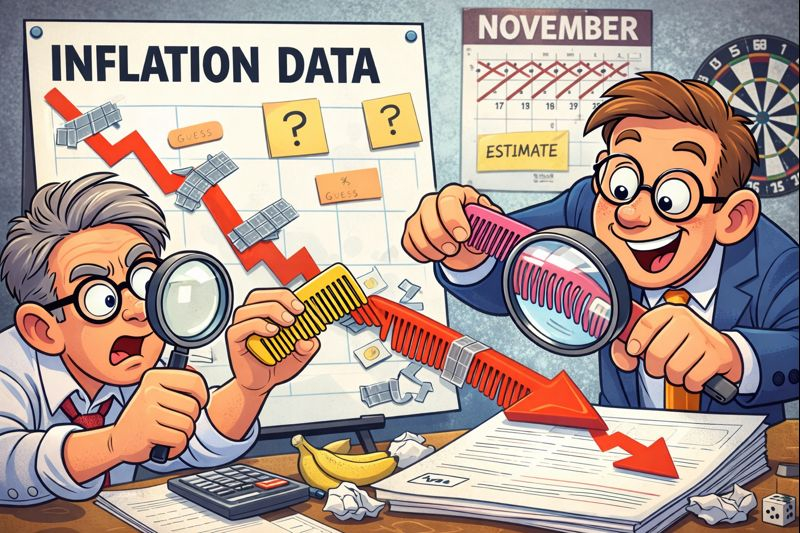
Inflation Eased to 2.7% in Report Distorted by Government Shutdown
- The consumer-price index increased 2.7% in November from a year earlier, a decrease from 3% in September.
- Excluding volatile food and energy costs, core prices rose 2.6% over the year, below the 3.0% expectation.
- Economists are concerned that a technical fix by the Bureau of Labor Statistics may have understated the November inflation figure.
The key takeaway – The challenge of the century, especially over the past half decade, has been sticky inflation, and it returned to the forefront this week as the November report came in much cooler than expected. Good news… right? Thanks to the government shutdown, economists are warning that the data lack a meaningful punch. Between a gap in the typical collection timeline and the need to hastily assemble November figures, more assumptions than usual were required – particularly for in‑person price collection, since sampling could not begin until November 14, when the government reopened – which likely contributed to inflation printing lower than expected.
With that said, while the data on the magnitude of the decline are noisy, the overall disinflationary direction still looks intact, reflecting in part companies absorbing a meaningful share of tariff effects rather than fully passing them on. As for why inflation has remained stubbornly elevated, many economists point to higher‑income households as a key driver of “sticky” demand, something investors may be getting more accustomed to. The continued rally across the stock market has boosted the wealth and confidence of higher earners, who tend to invest more and then tap some of their gains to sustain spending in services. That helps keep growth metrics solid, but it also exacts a toll on the average consumer, who feels the brunt of higher prices, pressures that could intensify early in the new year, when companies often reset their price lists in response to cost and sales trends.
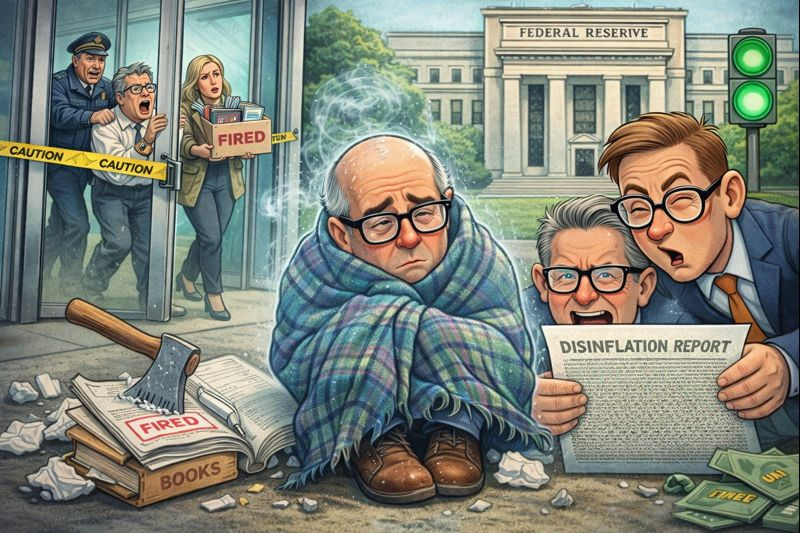
Already shaky job market weakened in October and November
- November added 64,000 jobs, cooler than expectations.
- Unemployment rate rose to 4.6% from 4.4% in September, skipping October as the bureau was unable to conduct surveys thanks to the shutdown.
The key takeaway – The labor market is finally catching a chill, with job growth limping in well below forecasts and a 160,000 exodus from the federal payrolls doing most of the damage. Turns out the government can balance the books – by firing the bookkeepers.
The silver lining, however, is that the latest inflation report, statistical hiccups and all, still points to price pressures easing back toward something resembling normal. Headline CPI is sliding closer to the Fed’s comfort zone, even if shutdown‑warped data means economists are squinting at the fine print like it is a Magic Eye poster.
Taken together, softer hiring and cooler inflation give investors permission to daydream about a central bank that keeps trimming rates instead of just talking about “monitoring the data.” In other words, this jobs report may be ugly for workers, but for a market hooked on liquidity, it looks suspiciously like another green light for the Fed to keep nudging borrowing costs lower.
From Around the Watercooler

Bank of England cuts interest rates, in welcome Christmas boost for consumers
Waymo pauses robotaxi service in San Francisco after blackout chaos
U.S. Oil Blockade of Venezuela Pushes Cuba Toward Collapse
Mortgage Rates Are Falling but Owners Still Won’t Sell